How does a septic drain field work?
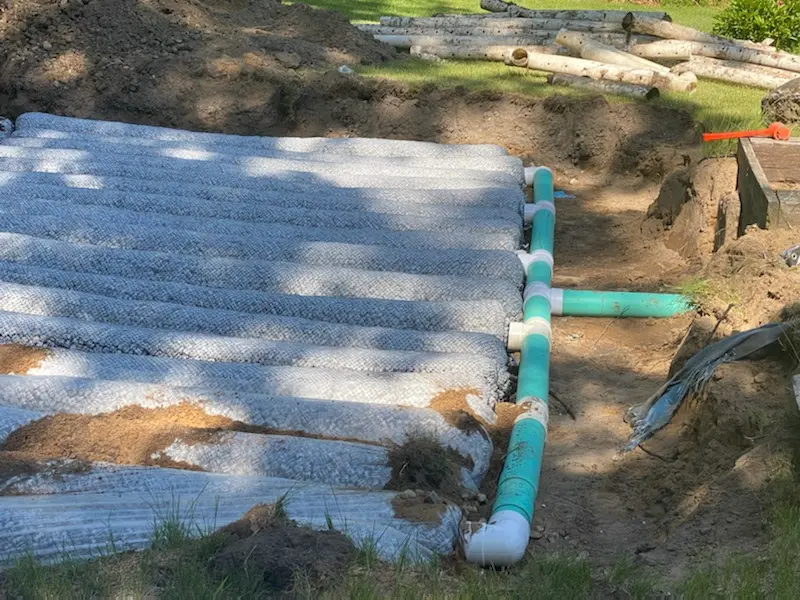
A drain field, also called a leach field, is the final treatment stage of your septic system. After solids settle in the tank, liquid effluent flows into a network of perforated pipes buried in gravel-filled trenches, where it slowly disperses into the surrounding soil for natural filtration.
Your septic tank separates solids and scum from the wastewater. The remaining liquid, called effluent, drains out to the field, where perforated pipes release it into gravel and soil.
As the effluent percolates down through the soil, naturally occurring bacteria break down remaining contaminants before the water rejoins the groundwater. A healthy drain field is essential to keeping the whole system working safely.
- Tank settles solids and holds scum at the top
- Liquid effluent flows to the field by gravity or pump
- Perforated pipes distribute effluent across gravel trenches
- Soil and bacteria provide final natural filtration
What are the warning signs of a failing drain field?
Watch for standing or pooling water over the field, sewage odors outdoors or indoors, unusually lush or green grass above the trenches, slow drains throughout the house, and gurgling pipes. These symptoms mean effluent is not draining properly and the field needs prompt attention.
Drain field problems often appear gradually, then worsen fast. Catching them early can mean the difference between a maintenance visit and a full replacement.
If you notice any of the signs below, call us at (989) 205-6017. We serve Saginaw, Midland, Bay City, Bridgeport, Freeland, Gladwin, and surrounding areas.
| Warning sign | What it may indicate |
|---|---|
| Pooling or soggy ground over the field | Effluent is surfacing because soil cannot absorb it |
| Sewage odors outdoors or indoors | Wastewater is backing up or surfacing |
| Unusually lush, green grass over trenches | Excess effluent is fertilizing the surface |
| Slow drains throughout the home | The system cannot move water away efficiently |
| Gurgling pipes or fixtures | Air trapped by a backed-up or overloaded field |
| Sewage backing up indoors | Advanced failure requiring immediate service |
How can I extend the life of my drain field?
Protect your drain field by pumping the septic tank every 3 to 5 years, conserving water, keeping vehicles and heavy loads off the field, diverting rain runoff away from it, and never flushing grease, wipes, or chemicals. Regular tank maintenance is the single best way to prevent field failure.
Most drain field failures start with a neglected tank. When solids overflow into the field, they clog the soil and gravel, and that damage is difficult to reverse.
Simple habits protect your investment and keep the system draining for years. When in doubt, schedule an inspection with our team.
- Pump your septic tank every 3 to 5 years
- Spread out laundry and water use to avoid overloading
- Keep cars, trailers, and structures off the field
- Direct gutters, sump pumps, and runoff away from the trenches
- Avoid flushing grease, wipes, and harsh chemicals
- Fix leaky fixtures that add unnecessary water
Drain field dos and don'ts
Do keep the area clear, grassy, and well-drained, and stay on a regular pumping schedule. Don't park, pave, or plant trees over the field, and don't send excess water or harmful substances into the system. Small choices every day decide how long your drain field lasts.
The table below summarizes the habits that help and the ones that cause the most damage we see in the field.
| Do | Don't |
|---|---|
| Pump the tank on schedule | Let solids overflow into the field |
| Plant grass over the field | Plant trees or shrubs with deep roots |
| Keep the area open and mowed | Pave, pour concrete, or build over it |
| Spread out water use | Overload the system in a single day |
| Divert rainwater away | Let runoff saturate the soil |
| Flush only waste and toilet paper | Flush grease, wipes, or chemicals |
Rejuvenation vs. replacement: which does my drain field need?
If the field is clogged but the soil and pipes are still sound, rejuvenation and restored tank maintenance may bring it back. If trenches are saturated, crushed, or the soil can no longer absorb effluent, replacement is the safer long-term fix. An on-site inspection tells us which path makes sense.
Not every struggling drain field needs to be dug up. Sometimes restoring proper tank pumping, relieving an overloaded system, and clearing blockages gives the soil time to recover.
When a field has reached the end of its life, continuing to patch it only risks backups and health hazards. We give you an honest assessment and clear, upfront options, never a hard sell.
Call (989) 205-6017 to schedule a drain field inspection anywhere in the Great Lakes Bay Region.
- Rejuvenation may work when soil and pipes remain intact
- Replacement is needed when trenches are saturated or collapsed
- An inspection confirms the true condition before any work
- We explain your options in plain language with upfront pricing
Why choose Discount Septic for drain field service?
Discount Septic Service is an owner-operated, fully licensed and insured Michigan team with decades of septic expertise. We handle drain field repair, maintenance, and restoration with environmentally responsible practices, clear upfront pricing, and 24/7 emergency availability across Mid-Michigan.
Drain field issues affect your home, your yard, and the environment, so experience matters. Our local crew knows Mid-Michigan soils and systems.
We pair every service with honest, upfront pricing and no hidden fees, plus responsible waste disposal that protects your property and the groundwater.
- Fully licensed and insured in Michigan
- Owner-operated local team with decades of expertise
- Clear, honest, upfront pricing with no hidden fees
- Environmentally responsible waste disposal
- 24/7 emergency service across the region
Frequently Asked Questions
How long does a septic drain field last?
Can a failing drain field be repaired without full replacement?
Why is the grass greener over my drain field?
What causes a drain field to fail?
Can I drive or park on my drain field?
How often should I pump my tank to protect the drain field?
Do you offer emergency drain field service?
What areas do you serve for drain field service?
Trusted Septic Resources
Homeowner guidance from authoritative sources on septic system care, maintenance, and Michigan regulations: