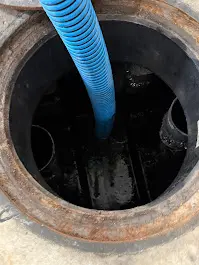
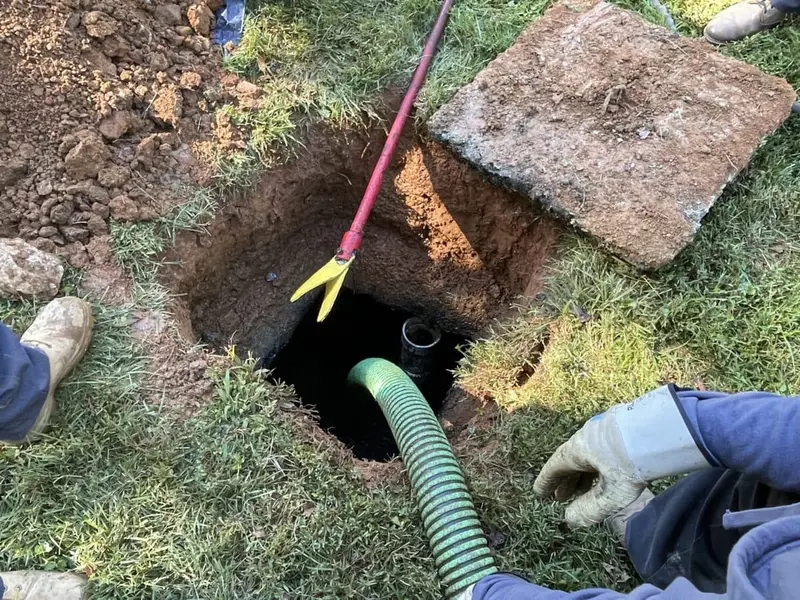
What is the difference between septic pumping and cleaning?
Pumping removes the liquid and floating waste from your tank, while a full cleaning removes everything, including the compacted sludge layer settled at the bottom. Cleaning uses water and agitation to scour out hardened solids that pumping alone leaves behind, restoring your tank's full working capacity.
Many homeowners use the terms interchangeably, but they describe different levels of service. A standard pump-out draws off the wastewater and loosens scum, yet dense sludge often stays packed on the tank floor.
A true cleaning agitates and removes that bottom layer so your tank starts fresh. Over years, unremoved sludge reduces capacity and pushes solids toward the drain field, where they cause expensive damage.
- Pumping: removes liquid effluent and floating scum
- Cleaning: removes liquid, scum, and compacted bottom sludge
- Cleaning restores closer to full tank capacity
- Both are performed by our licensed, insured Michigan team
| Factor | Pumping | Full Cleaning |
|---|---|---|
| Removes liquid effluent | Yes | Yes |
| Removes floating scum layer | Partially | Yes |
| Removes compacted bottom sludge | No | Yes |
| Restores full tank capacity | Partially | Yes |
| Best for routine maintenance | Yes | Yes, more thorough |
| Helps protect the drain field | Somewhat | Strongly |
Why does removing sludge and scum matter?
Sludge and scum are the solid layers that build up in every septic tank. When they accumulate too high, solids escape into the drain field, clog soil pores, and cause backups or system failure. Removing them during cleaning protects the most expensive part of your system.
Inside a working tank, heavy solids sink to form sludge while grease and lighter waste float as scum. Only the clarified middle layer should flow out to the drain field.
If sludge and scum are left too long, they crowd the tank and allow solids to flow where they shouldn't. Drain field repairs and replacements are far costlier than routine cleaning, so regular sludge removal is the smartest protection you can give your system.
How does cleaning extend the life of your septic system?
Regular cleaning keeps solids out of the drain field, prevents clogs, and maintains proper settling inside the tank. A system that drains clear effluent rather than solid-laden water lasts far longer, often avoiding premature drain field failure and the major cost of a full system replacement.
The drain field is the heart of a septic system and the hardest component to replace. Keeping it free of solids is the single best way to extend overall system life.
Thorough cleaning also lets our team inspect the tank's interior condition while it is empty, so small issues can be caught before they become emergencies.
- Protects the drain field from solid clogs
- Maintains proper settling and separation inside the tank
- Reduces the risk of backups and sewage odors
- Gives our team a clear view to spot early problems
When should you schedule septic tank cleaning?
Most households should have the septic tank pumped or cleaned every 3 to 5 years, though larger families or smaller tanks may need service more often. You should also schedule immediately if you notice warning signs like slow drains, odors, or pooling water over the drain field.
Frequency depends on tank size, household size, and water usage. A typical residential tank holds 1,000 to 1,500 gallons, and a standard service visit usually takes 20 to 60 minutes.
If you are unsure when your tank was last serviced, call us and we can help you set a sensible schedule for your home or business.
| Household Size | Typical Service Interval |
|---|---|
| 1-2 people | Every 4-5 years |
| 3-4 people | Every 3-4 years |
| 5-6 people | Every 2-3 years |
| 7+ people | Every 1-2 years |
What are the warning signs your tank needs cleaning now?
Watch for slow drains throughout the house, sewage odors indoors or outside, gurgling pipes, and pooling water or unusually lush, green grass over the drain field. Any of these signs can mean your tank is overfull with sludge and needs prompt cleaning before a backup occurs.
These symptoms rarely improve on their own. The sooner you act, the less likely you are to face a sewage backup or drain field damage.
Discount Septic offers 24/7 emergency service across the Great Lakes Bay Region, so you are never stuck waiting when a septic problem turns urgent.
- Slow drains in multiple fixtures
- Sewage odors inside or around the yard
- Gurgling sounds from drains or toilets
- Pooling water or soggy ground near the tank
- Unusually lush, green grass over the drain field
Why choose Discount Septic Service for cleaning?
Discount Septic is an owner-operated, fully licensed and insured Michigan team with decades of expertise and environmentally responsible waste disposal. We serve the Great Lakes Bay Region with clear, honest, upfront pricing and no hidden fees, plus 24/7 emergency availability when you need us most.
We clean septic systems for homes and businesses across Saginaw, Midland, Bay City, Bridgeport, Freeland, Gladwin, and surrounding central-Michigan communities.
Our local team treats your property with care and disposes of all waste responsibly. Call (989) 205-6017 to schedule your cleaning.
Frequently Asked Questions
Is septic cleaning the same as septic pumping?
How often should a septic tank be cleaned?
How long does septic tank cleaning take?
What happens if I never clean my septic tank?
What are the signs my septic tank needs cleaning?
Does cleaning really extend the life of my septic system?
Do you offer emergency septic cleaning?
What areas do you serve for septic cleaning?
Trusted Septic Resources
Homeowner guidance from authoritative sources on septic system care, maintenance, and Michigan regulations: