
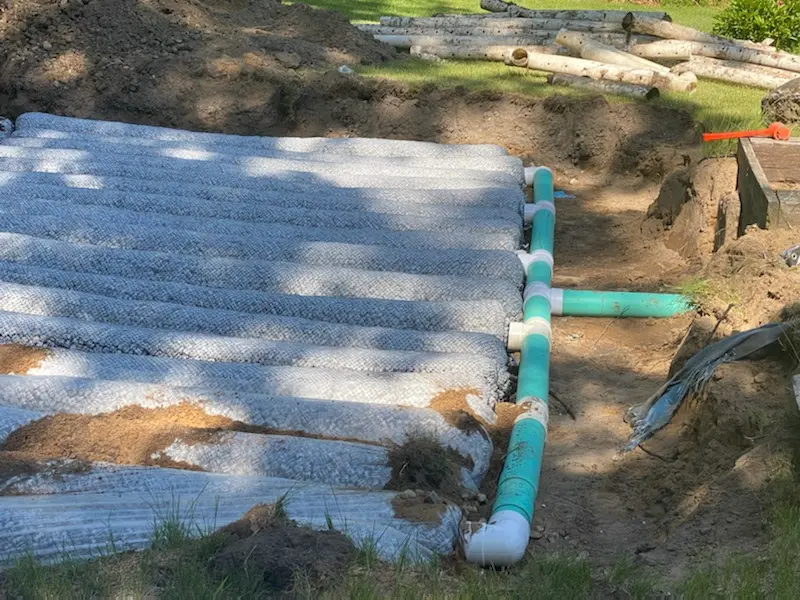
Your septic tank gets most of the attention, but the drain field (also called the leach field or absorption field) is where wastewater is actually treated. Liquid from the tank flows through perforated pipes into gravel or chambers and soaks into the soil, where natural processes clean it. Protecting the field is mostly about protecting the soil.
Pump the tank on schedule
The number one cause of drain field failure is solids escaping from a tank that has not been pumped. Those solids clog the soil, and a clogged field cannot be cleaned the way a tank can. Regular pumping, commonly every three to five years for a typical household, is the best thing you can do for the field.
Spread out your water use
The field can only absorb so much at once. Running several loads of laundry in one day, or a leaking toilet that runs all night, can overload it. Spread laundry through the week and fix leaks promptly.
Keep weight off the field
Driving or parking on the field compacts the soil and can crush pipes. Do not build sheds, patios, pools or driveways over it, and keep heavy equipment off during yard projects.
Plant smart
Grass is the best cover for a drain field. Trees and large shrubs send roots toward water and can grow into the lines, so keep them well away.
Manage surface water
Point downspouts and sump discharges away from the field. Extra water soaking in from above leaves less room for the water coming from the tank.
Watch what goes down the drain
Grease, wipes, harsh chemicals and large amounts of food waste all make their way toward the field eventually. Keep them out of the system.
Know the warning signs
Soggy ground or pooling water over the field, a strip of unusually green grass, sewage odors in the yard, or slow drains that return soon after pumping can all point to a field in trouble. Caught early, some problems can be managed. Left alone, they usually end with a replacement, which in Michigan requires a permit from the county health department.