
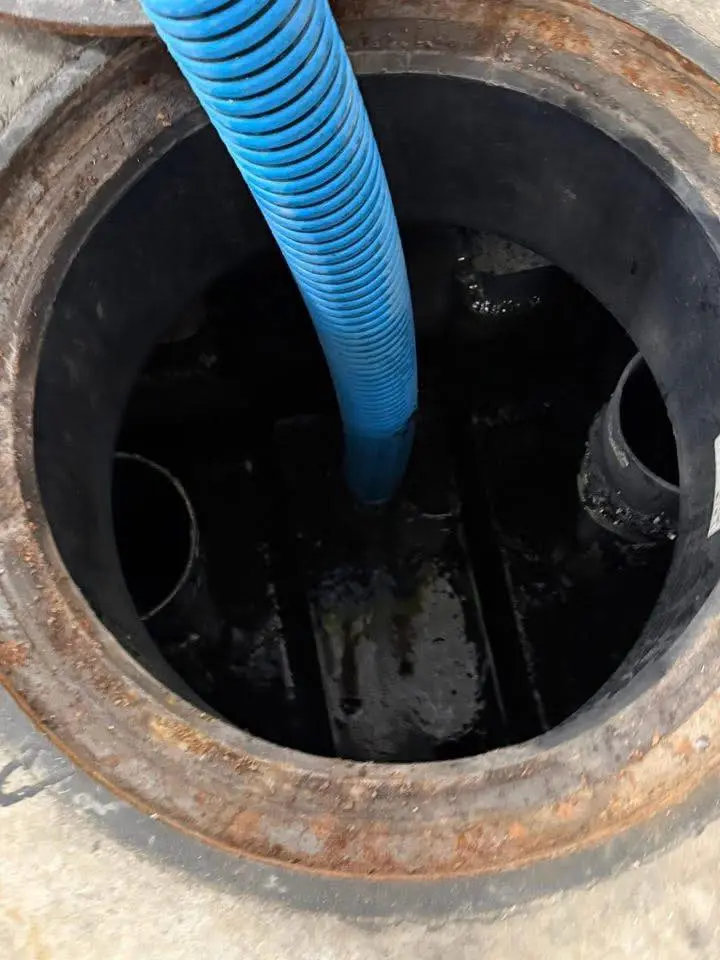
Ask ten people how often a septic tank should be pumped and you will hear everything from every year to never. The widely used guideline for a typical household is every three to five years. That range exists because every home is different, and the right number for yours comes down to a handful of factors.
What is actually building up in the tank
A septic tank separates what comes out of your house into three layers. Heavy solids settle to the bottom as sludge. Fats, oils and light material float to the top as scum. In between is the relatively clear liquid that flows out to the drain field. Bacteria in the tank digest some of the solids, but a portion always remains, so the sludge and scum layers grow over time.
Pumping removes those layers before they get thick enough to escape with the liquid. If solids reach the drain field they clog the soil, and that is where a cheap maintenance task turns into an expensive repair.
The four things that set your interval
1. Tank size
A bigger tank holds more sludge before it becomes a problem. Many homes have tanks in the 1,000 to 1,500 gallon range, but older homes may have smaller ones. If you do not know your tank size, the pumping crew can usually tell you.
2. Number of people
More people means more solids and more water. A family of five fills a tank much faster than a retired couple on the same system.
3. Water use
Long showers, frequent laundry and leaky fixtures push more water through the tank, which gives solids less time to settle. Spreading laundry across the week and fixing running toilets helps.
4. What goes down the drain
Garbage disposals add a lot of solids. Grease, wipes (even ones labeled flushable), paper towels and feminine products do not break down and fill the tank faster.
A simple way to set your schedule
If you do not know when the tank was last pumped, start there: have it pumped and ask the crew how full it was. A tank that was nearly at its limit after three years tells you to stay at three; one that was barely half full after four years may be able to go longer. Write down the date and what was found, and keep it with your house records.
Signs you should not wait
Regardless of the calendar, call for service if you notice slow drains throughout the house, gurgling, sewage odors, or wet spots and unusually green grass over the drain field. Those are signs the tank may be full or the field is struggling.
The bottom line
Regular pumping is the least expensive way to protect the most expensive part of your system. If it has been more than a few years, or you simply do not know, it is time to schedule a visit.